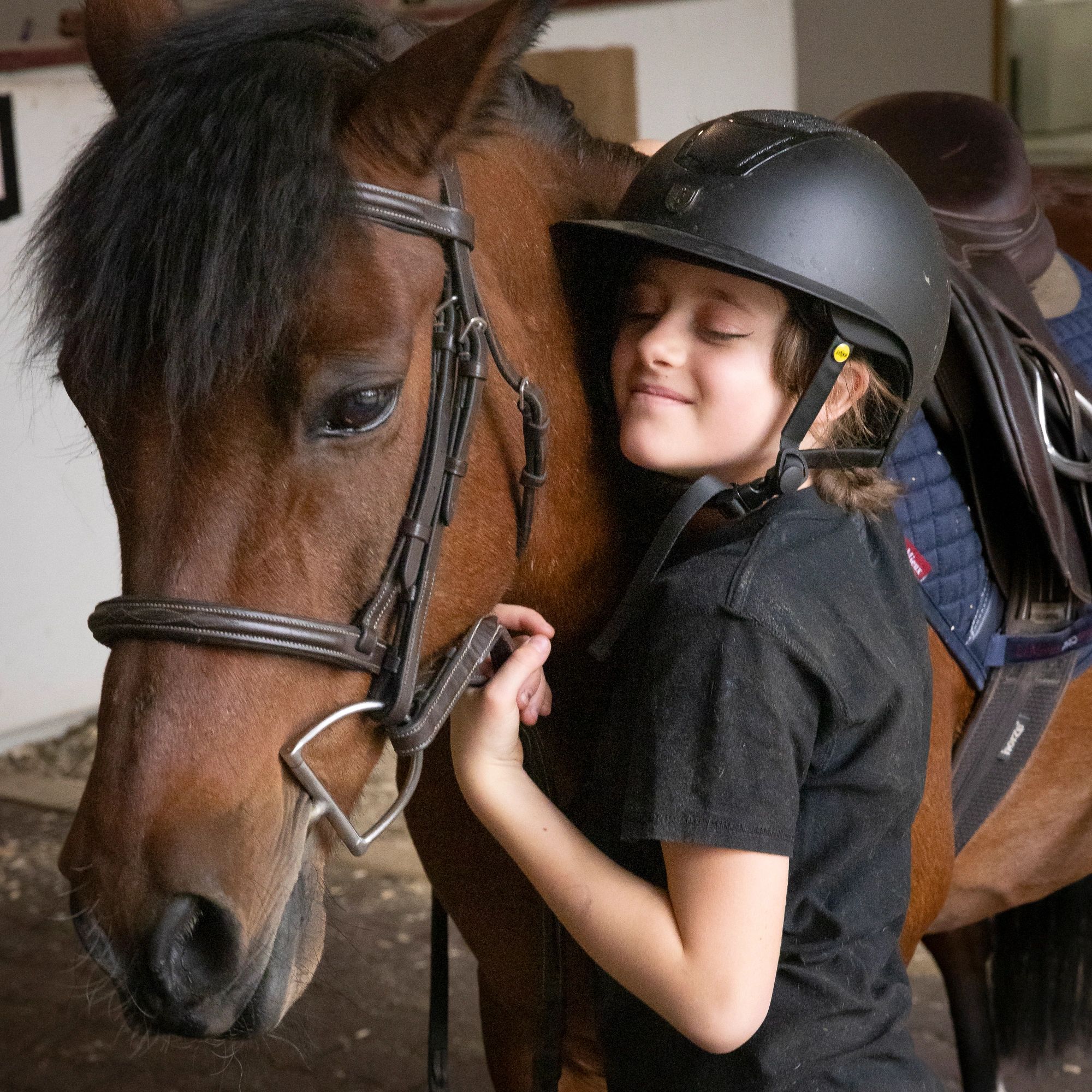
Questions to Ask Your Potential Instructor
Choosing a riding instructor is an important decision for riders, parents, and horse owners. A good instructor does more than teach riding skills: they set safety expectations, match riders with appropriate horses, communicate clearly, respect horse welfare, and help each student progress at a pace that fits their goals.
Not every excellent instructor holds the same certifications or follows the same teaching path. Certifications, competition records, and years of experience can be helpful context, but they should be considered alongside practical safety standards, teaching ability, references, horse care, and whether the program is a good fit for you or your child.
Use these questions when comparing horseback riding instructors, lesson programs, and equestrian facilities.
Credentials & Experience
Ask about training, teaching background, and insurance and emergency readiness
- What professional certifications, memberships, or continuing-education programs do you hold, such as USEF, USDF, British Horse Society, CHA, Pony Club, or discipline-specific organizations? Are they current?
- How long have you been teaching, and which rider levels do you regularly teach—from first-time riders to experienced competitors?
- What disciplines do you teach, and what is your practical riding, training, coaching, or competition experience in those disciplines?
- Do you carry appropriate liability insurance for riding instruction, and can you confirm that coverage is current?
- Are you trained in equine first aid, human first aid, CPR, or emergency response? Who is responsible for responding if a rider or horse is injured during a lesson?
- Do you pursue ongoing education in riding, coaching, rider safety, equine welfare, or your discipline?
Why this matters: Credentials can demonstrate commitment to education and professional standards, but they are not the only measure of a good teacher. Ask how the instructor translates knowledge into safe, understandable lessons for riders at your level.
Teaching Philosophy & Approach
A good fit depends on how the instructor communicates, sets expectations, and supports your goals.
- How would you describe your teaching style: structured and technical, feel-based, goal-oriented, or a combination?
- How do you help a rider who feels anxious, lacks confidence, or is returning after a fall?
- How do you balance rider-position instruction with work on the horse’s balance, rhythm, comfort, and way of going?
- How do you give corrections when a rider is struggling or when a horse is having a difficult day?
- How do you adapt lessons for riders whose goals are recreational, horsemanship-focused, fitness-focused, or competitive?
- If a student wants to show, what is your approach to preparing them, and how do you determine when they are ready?
- How do you define progress for a beginner who may not want to compete?
- How do you communicate between lessons about goals, homework, scheduling, or concerns?
Good sign: The instructor can explain their approach plainly, welcomes reasonable questions, and does not promise unrealistic progress or push a rider into showing, leasing, or purchasing before they are ready.
Horses & Facility
For a lesson program, horse welfare and suitable horse-rider matching are central to both safety and learning.
- Are lessons taught on school horses, a rider’s own horse, or both?
- If you use school horses, how are riders matched to horses based on size, confidence, experience, and goals?
- How are school horses selected, conditioned, rested, and rotated between lessons?
- What is the program’s approach to veterinary care, farrier care, turnout, nutrition, workload, and retirement for lesson horses?
- What are the arena footing and riding surfaces like? How are they maintained, inspected, watered, dragged, or closed when unsafe?
- Is there an indoor or covered riding option for rain, snow, heat, smoke, lightning, wind, or other unsafe weather?
- What emergency procedures are in place for a fall, fire, severe weather, loose horse, colic, injury, or evacuation?
- Who is on-site during lessons, and where are first-aid supplies, emergency contacts, and fire extinguishers located?
- Can I tour the facility before committing to a lesson package?
Good sign: A reputable program should be able to discuss how it protects lesson horses and manages safety without becoming defensive or vague.

Lesson Format and Policies
Clear policies prevent misunderstandings and help you compare the true cost and structure of different programs.
- Are lessons private, semi-private, or group? What is the maximum group size?
- How long is each lesson, and does that time include grooming, tacking up, untacking, horse-care instruction, or only mounted instruction?
- Can I choose the lesson format, or does the instructor recommend a format based on experience and goals?
- What are the current rates for single lessons, packages, memberships, leases, camps, clinics, or showing support?
- Are there additional fees for helmets, facility use, horse leasing, show coaching, hauling, blanketing, tack, or other services?
- What is the cancellation, late-cancellation, no-show, weather, and make-up lesson policy?
- Is there a lesson agreement or contract? What financial commitments, notice requirements, and refund terms should I understand before enrolling?
- How are price changes communicated?
- If the instructor is ill, traveling, or unavailable, are lessons rescheduled, taught by a qualified substitute, credited, or forfeited?
- How are new riders evaluated and placed in an appropriate lesson level?
Safety Expec ations
Riding has inherent risk. A professional program should communicate safety rules clearly and apply them consistently.
- Is an ASTM/SEI-certified riding helmet required for mounted riders? If so, for which activities and age groups?
- Are riders required to wear proper boots with a heel and other appropriate riding attire?
- What is the policy on jewelry, loose clothing, phones, long hair, and other safety considerations while mounted?
- Are parents or guardians welcome to observe a child’s lesson? Are there safe viewing areas?
- What supervision is provided for minors before and after lessons?
- Is riding alone allowed, or must another responsible person be on the property?
- How do instructors decide when wind, heat, lightning, arena conditions, horse behavior, or air quality make a lesson unsafe?
- What is the policy for riders who are injured, ill, fatigued, or not wearing required safety equipment?
Important: “No helmet, no riding” is a simple policy that communicates safety standards clearly. In the U.S., look for helmets labeled to the current ASTM/SEI equestrian standard rather than relying on a bike helmet or an old damaged riding helmet.
References & Culture
The right barn should feel professional, respectful, and aligned with your values.
- May I speak with two or three current students, former students, or parents who are comfortable serving as references?
- Are there veterinarians, farriers, show professionals, or other industry colleagues who can speak to the program’s reputation and horse care?
- How long have your longest-standing students been with you, and what do they value about the program?
- How do you handle a disagreement with a client about goals, training methods, horse care, scheduling, or safety?
- What behavior do you expect from riders, parents, staff, and visitors?
- How do you address bullying, exclusion, poor sportsmanship, or unsafe conduct at the barn?
- How do you ensure students, staff, and horses are treated respectfully?
- What opportunities are available beyond weekly lessons, such as unmounted horsemanship education, clinics, camps, volunteering, leasing, or competitions?
Good sign: A healthy riding program has clear boundaries, respectful communication, consistent safety rules, and an environment where riders can ask questions without embarrassment.
Aurum Equestrian
Aurum Equestrian is a horseback riding school in Parker, Colorado, serving riders from Parker, Denver, and the surrounding south-metro area. Aurum offers English riding instruction with foundations applicable to hunter/jumper, dressage, and three-day eventing. The facility has a heated indoor arena for year-round lessons, and riders are required to wear helmets while mounted.